
Grand Slam & ATP tour
Tennis transportation.
Tennis has the least predictable finishing time in sport. A night session scheduled to end at eleven can end at two in the morning, and no amount of planning changes that — which makes the return journey, not the arrival, the thing worth engineering.
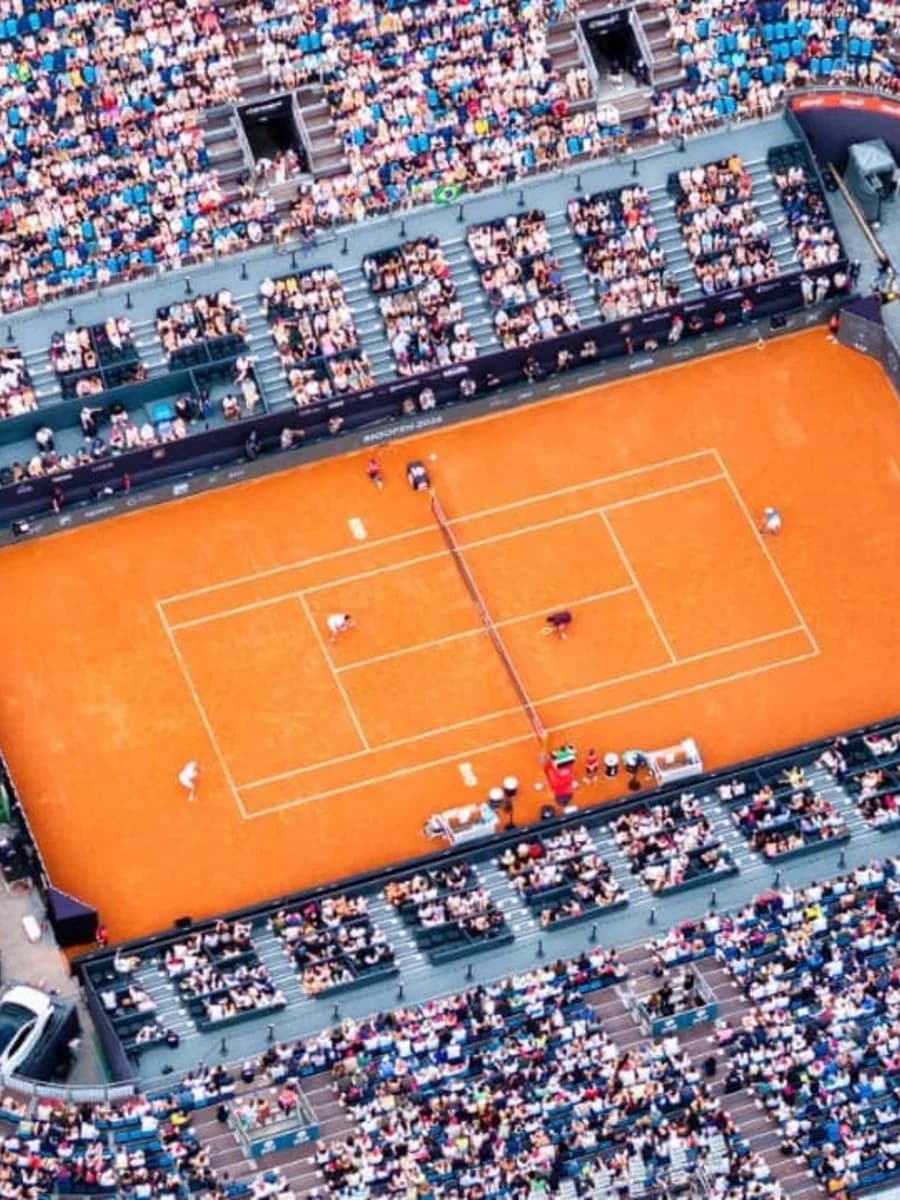
Grand Slam & ATP tour
A year-round calendar. The Grand Slams anchor January, May–June, June–July and August–September, with ATP and WTA events filling the weeks between.
Tournament venues internationally · Austin and 800+ cities
Tennis at a glance
- Defining constraint
- Matches have no clock — night sessions routinely overrun
- Typical pattern
- Multi-day passes, so the same journey repeats for a week or more
- Grand Slams
- Four majors anchoring January, May–June, June–July and August–September
- Site access
- Large controlled precincts with defined drop-off zones and long internal walks
- Coverage
- Austin, plus 800+ cities through vetted partners
The overrun is the plan
A five-set night match does not care about a booking window. Ride-hail at 1:30am outside a tennis precinct is expensive when it exists and absent when it does not, and everybody leaving at once makes both worse.
A held vehicle with an open return removes the entire category of problem. The chauffeur waits, the pickup point is fixed in advance, and a match going long costs you nothing but the extra hours you were always going to be there.
The same journey, ten times
Tennis is unusual in that guests often hold multi-day or full-tournament passes, which turns transportation into a repeated commute rather than a one-off transfer. That is an opportunity: the route is learned, the timing is refined, the set-down point is known, and by day three the journey is invisible.
It also changes the economics. A repeated daily journey across a week or two is better arranged as a program than as a series of separate bookings, and it is worth telling us the whole span up front rather than one day at a time.
Hospitality, players and teams
Corporate hospitality at a Slam looks like hospitality anywhere else — guests, hotels, a manifest, vehicles held. Player and team movement is a different discipline: strict timing, privacy, and equipment, with practice-court schedules that shift daily.
Both are planned in advance rather than dispatched on the day, and both need a coordinator who can be reached from inside a large controlled site where phone signal is unreliable.
Which vehicle suits Tennis



Tennis transportation, answered.
Nothing, from your side. The vehicle is held with an open return and the chauffeur waits. That is the entire reason to pre-arrange rather than rely on ride-hail at a tennis precinct after midnight.
Plan Tennis transportation.
Share the essentials and our event team will build your transportation plan.